Five Forces Model for Local Retail Businesses

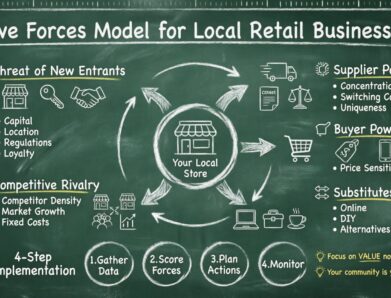
Five Forces Model for Local Retail Businesses

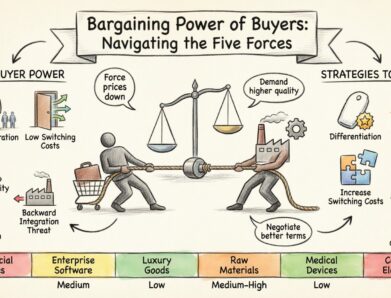
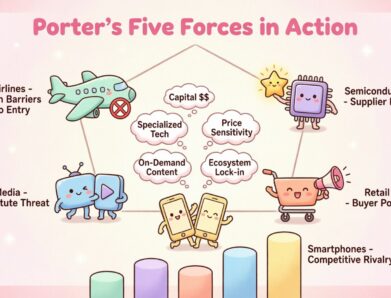
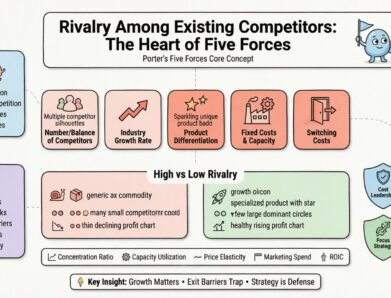
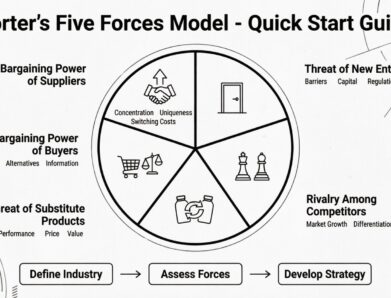
Running a local retail business involves navigating a complex web of market pressures. While big chains often have dedicated strategy teams, independent store owners must understand their competitive landscape without external consultants. The Five Forces Model, originally developed by Michael Porter, offers a structured way to assess industry attractiveness and profitability. This framework helps local […]

C4 Model at Scale: Managing Complexity in Large-Scale Systems

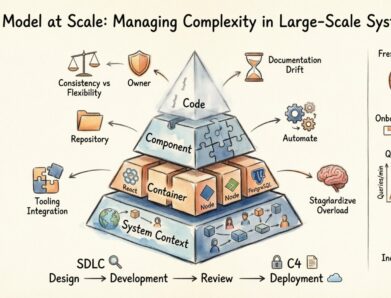
C4 Model at Scale: Managing Complexity in Large-Scale Systems

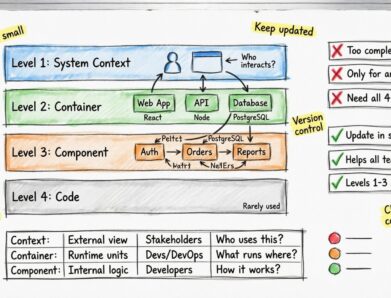
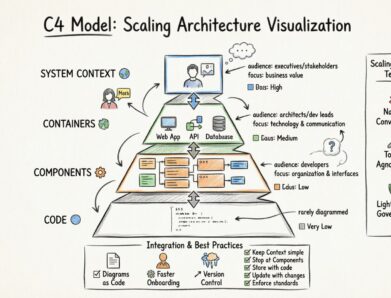
Modern software architecture is not merely about writing code. It is about managing the inevitable complexity that arises when systems grow. As organizations expand, the number of microservices, integrations, and data flows increases exponentially. Without a standardized approach to documentation, architectural understanding becomes siloed, fragile, and difficult to onboard new engineers to. The C4 model […]

C4 Model for Enterprise Architects: Scaling Visualization Across Teams

C4 Model for Enterprise Architects: Scaling Visualization Across Teams

Enterprise architecture demands clarity. In complex organizations, software systems evolve rapidly, often obscuring the relationships between services, data, and users. When documentation becomes outdated or inconsistent, decision-making slows, and technical debt accumulates. The C4 Model offers a structured approach to software architecture documentation, providing a hierarchy of views that scales from high-level business context down […]

Five Forces vs. Other Strategic Models: A Side-by-Side Comparison

Five Forces vs. Other Strategic Models: A Side-by-Side Comparison

Navigating the competitive landscape requires more than intuition. It demands structured frameworks that reveal hidden dynamics within an industry. While Michael Porter’s Five Forces Analysis remains a cornerstone of strategic planning, it functions best when understood alongside complementary tools. This guide dissects how the Five Forces model compares to other dominant strategic frameworks. We will […]

Five Forces Model: Best Practices for Strategic Planning

Five Forces Model: Best Practices for Strategic Planning

Understanding the competitive landscape is fundamental to sustainable business growth. The Five Forces Model, originally developed by Michael Porter, remains a cornerstone for industry analysis. It provides a structured framework to evaluate the intensity of competition and the attractiveness of an industry. When applied correctly within strategic planning, it reveals where power lies in a […]

C4 Model for Cloud-Native Systems: Visualizing Microservices and Services

C4 Model for Cloud-Native Systems: Visualizing Microservices and Services

Modern software architecture is complex. As systems evolve from monolithic structures to distributed cloud-native environments, understanding the relationships between components becomes critical. The C4 Model offers a structured approach to software architecture documentation. It helps teams visualize systems at multiple levels of abstraction. This guide explores how to apply the C4 Model specifically to cloud-native […]

Five Forces Model for Family Business Success Stories

Five Forces Model for Family Business Success Stories

Family businesses represent the backbone of many global economies. They carry a unique weight of legacy, governance, and long-term vision that distinguishes them from publicly traded corporations. However, maintaining continuity across generations requires more than just tradition. It demands rigorous strategic analysis. One of the most enduring frameworks for understanding market dynamics is Porter’s Five […]