Five Forces Model for Service-Based Industries

Five Forces Model for Service-Based Industries

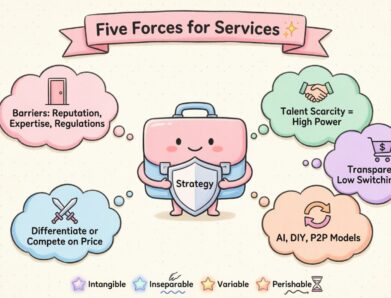
The service economy has transformed how value is created and delivered globally. Unlike tangible goods, services rely heavily on human interaction, expertise, and intangible processes. This distinction changes the dynamics of competition significantly. Traditional strategic frameworks must be adapted to fit this landscape. The Five Forces Model, originally designed for manufacturing, offers a robust lens […]

C4 Model and Security: Embedding Security Thinking in Architecture Diagrams

C4 Model and Security: Embedding Security Thinking in Architecture Diagrams

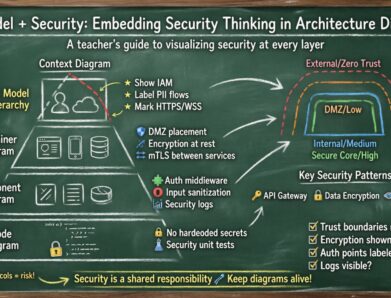
Software architecture diagrams serve as the primary communication tool for technical teams. They bridge the gap between abstract requirements and concrete implementation. However, a standard architecture diagram often focuses solely on functionality and data flow. It frequently overlooks the critical layer of security controls, trust boundaries, and threat mitigation strategies. When security is treated as […]

Five Forces Model Explained: Key Components and Breakdown

Five Forces Model Explained: Key Components and Breakdown

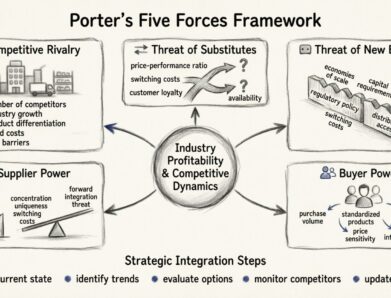
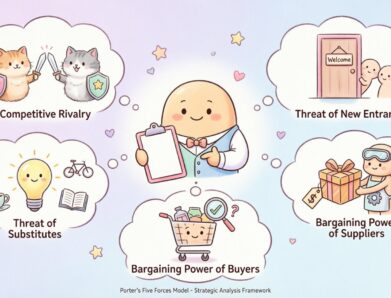
Strategic planning requires more than intuition. It demands a structured approach to understanding the competitive landscape. The Five Forces Model, developed by Michael E. Porter in 1979, remains a cornerstone of business strategy. This framework helps organizations assess the attractiveness of an industry and identify potential profitability. By analyzing specific market dynamics, businesses can formulate […]

How to Analyze Industry Competition Using the Five Forces

How to Analyze Industry Competition Using the Five Forces

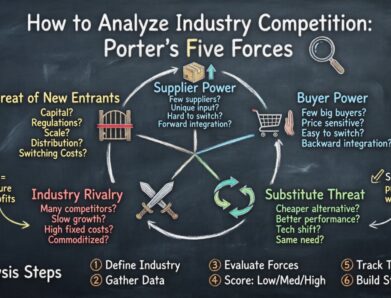
Understanding the competitive landscape is fundamental to sustainable business growth. When entering a market or refining a strategy, intuition alone is insufficient. You need a structured framework to deconstruct the forces shaping your industry’s profitability. This guide details how to analyze industry competition using the Five Forces model, providing a clear path to assessing market […]

Troubleshooting Your Five Forces Analysis: When Things Go Wrong

Troubleshooting Your Five Forces Analysis: When Things Go Wrong

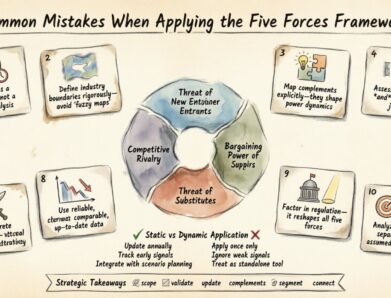
Strategic planning relies heavily on accurate data and sound logic. When you apply Michael Porter’s Five Forces framework, the goal is to understand the competitive intensity and attractiveness of a market. However, even the most experienced strategists encounter stumbling blocks. Missteps here can lead to misguided investments, missed opportunities, or exposure to threats that were […]

From Chaos to Clarity: Using the C4 Model to Structure Enterprise Systems

From Chaos to Clarity: Using the C4 Model to Structure Enterprise Systems

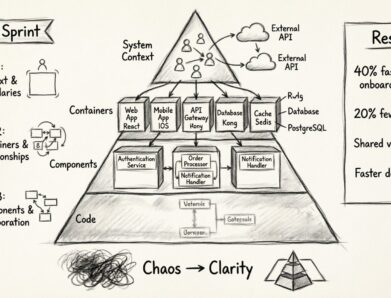
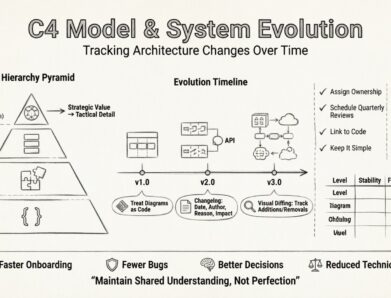
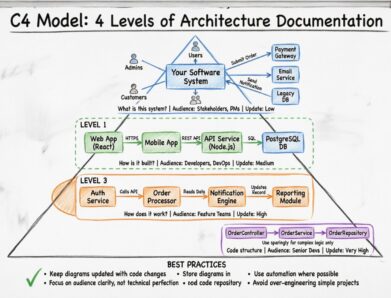
Enterprise architecture often resembles a tangled web. 🕸️ As systems grow, the gap between business goals and technical implementation widens. Documentation becomes outdated, diagrams are hard to read, and new team members struggle to grasp the landscape. This is where structure matters. The C4 Model offers a pragmatic approach to software architecture documentation, focusing on […]

C4 Model in Practice: Real-World Examples from Enterprise Environments

C4 Model in Practice: Real-World Examples from Enterprise Environments

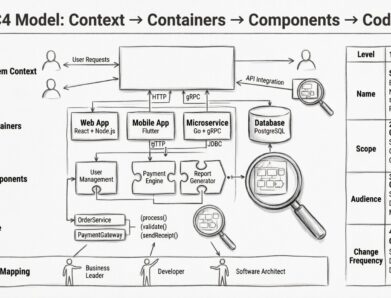
In modern enterprise settings, software architecture is rarely a single, monolithic entity. It is a complex ecosystem of services, databases, and integrations spread across multiple teams and technologies. Visualizing this complexity is a significant challenge. When documentation is vague or outdated, communication breaks down, and technical debt accumulates. The C4 model provides a structured approach […]