Visual Paradigm: Architecting AI Enterprise Solutions from Software Modeling
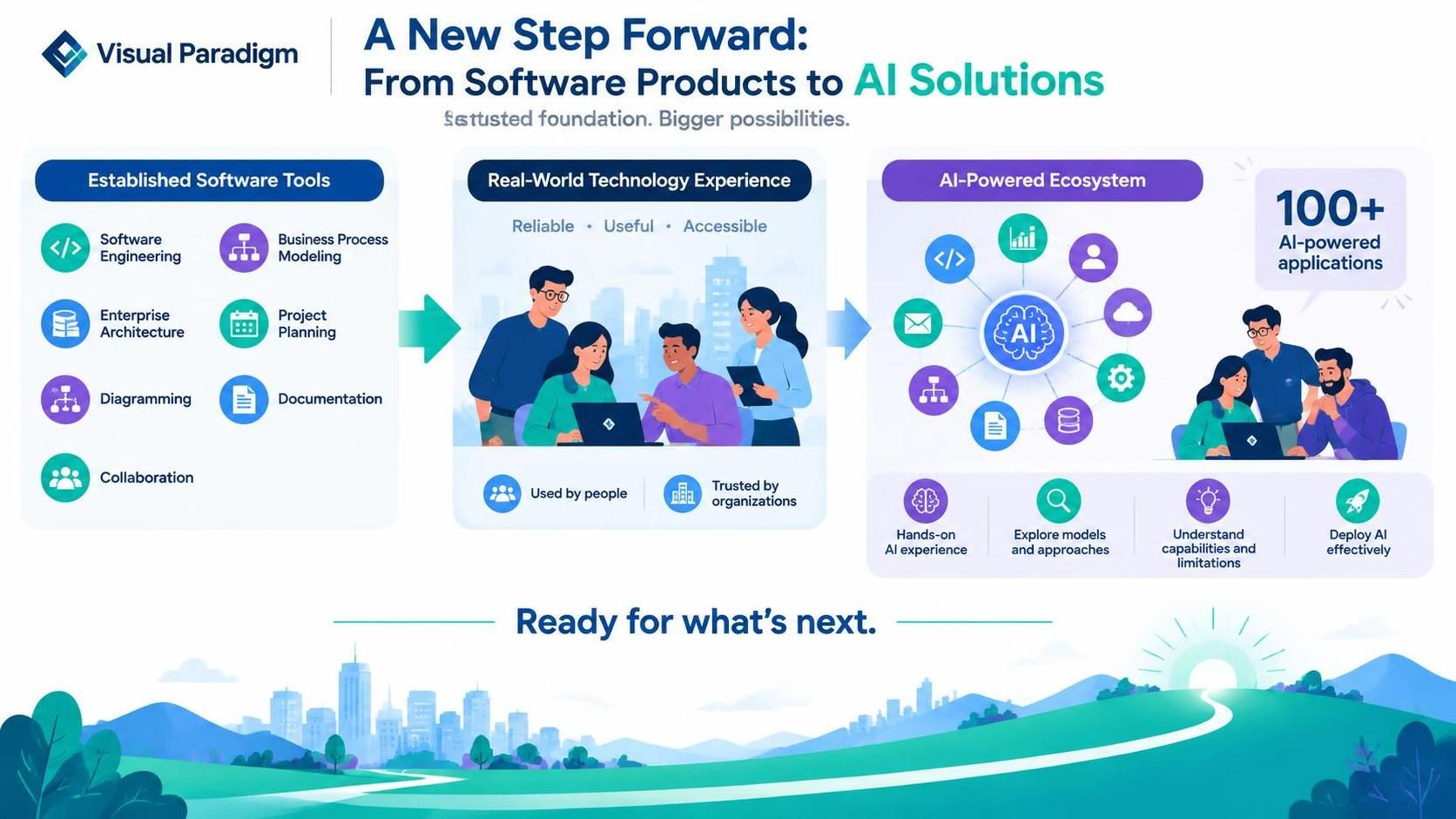
In the rapidly evolving landscape of enterprise technology, the distinction between “building software” and “building intelligence” is becoming increasingly blurred. Visual Paradigm has transitioned from being a provider of tools solely for modeling and engineering to a comprehensive partner in AI adoption. This tutorial explores the architectural shift described in their latest strategic vision: moving from standard software products to an integrated AI solution ecosystem.
The Foundation: Established Software Tools
The journey begins with a robust foundation in traditional software development and engineering. Before an organization can effectively implement Artificial Intelligence, it must have a clear understanding of its business processes, system architecture, and project requirements. Visual Paradigm has spent years cultivating expertise in these areas.
These Established Software Tools serve as the prerequisites for successful AI implementation. They are not replaced by AI but are instead the channels through which AI adds value. Key pillars include:
- Software Engineering: The backbone of application development, providing the necessary code structure and logic.
- Business Process Modeling: Essential for defining workflows that AI agents will eventually automate or optimize.
- Enterprise Architecture: Ensures that AI solutions fit within the broader IT landscape and data governance frameworks.
- Project Planning & Documentation: Critical for managing the lifecycle of AI projects, which often involve complex data science teams and business stakeholders.
The Bridge: Real-World Technology Experience
Knowledge of tools is one thing; practical application is another. The second stage of this ecosystem is Real-World Technology Experience. This component emphasizes that technology must be reliable, useful, and accessible.
Unlike theoretical models, this stage focuses on how technology performs in actual business environments. It bridges the gap between abstract diagrams and deployed systems. The core philosophy here is that technology should be:
- Used by People: Interfaces and workflows must be intuitive enough for non-technical staff to adopt.
- Trusted by Organizations: Systems must be robust, secure, and compliant with enterprise standards.
This “hands-on” experience provides the necessary context for AI deployment. It ensures that AI is not just a “black box” solution but a tool integrated into the daily operations of the business.
The Core: AI-Powered Ecosystem
The culmination of this journey is the AI-Powered Ecosystem. Visual Paradigm has moved beyond simply adding AI features to their existing software; they are actively embracing AI across their product ecosystem and internal operations. This has led to the development and support of over 100 AI-powered applications.
This ecosystem is characterized by a deep understanding of AI’s capabilities and limitations. It is not about replacing human intelligence, but augmenting it. The ecosystem focuses on:
- Hands-on AI Experience: Extensive practical knowledge gained from using AI in day-to-day work.
- Model Exploration: A commitment to exploring different AI models and approaches to find the best fit for specific tasks.
- Effective Deployment: A focus on how to deploy AI effectively, considering infrastructure, data privacy, and ethical implications.
The Solution: Integrated Quick AI Visual Modeling
For Small and Medium-sized Enterprises (SMEs) to large Enterprises, the ultimate goal is an Integrated Quick AI Visual Modeling and Knowledge Management Solution. This solution combines the Visual Paradigm ecosystem with AI core components, training, and setup assistance.
Instead of leaving organizations to figure out AI infrastructure, software selection, configuration, and implementation independently, this integrated approach helps them move from “intention” to “actual adoption.”
Key components of this solution include:
- Visual Modeling: Using diagrams to visualize AI workflows, data flows, and system interactions.
- Knowledge Management: Centralizing AI models, training data, and documentation within a unified platform.
- Training & Setup Assistance: Providing the necessary guidance to get teams up and running quickly.
Conclusion
The transition from software products to AI solutions represents a significant step forward for Visual Paradigm. By leveraging their deep experience in software engineering and real-world technology, they are now positioned to help businesses navigate the complexities of AI adoption. This integrated approach ensures that AI is not just a buzzword, but a practical, reliable, and accessible tool for driving business value.