![Free eBooks of IT [BooksOfAll]](https://www.booksofall.com/wp-content/uploads/2022/06/booksofall-logo-2.png)
Tags:
Five Forces vs. Other Strategic Models: A Side-by-Side Comparison
Navigating the competitive landscape requires more than intuition. It demands structured frameworks that reveal hidden dynamics within an industry. While Michael Porter’s Five Forces Analysis remains a cornerstone of strategic planning, it functions best when understood alongside complementary tools. This guide dissects how the Five Forces model compares to other dominant strategic frameworks. We will examine their distinct purposes, structural differences, and optimal application scenarios. 🧭
Understanding the Core: Porter’s Five Forces 🏭
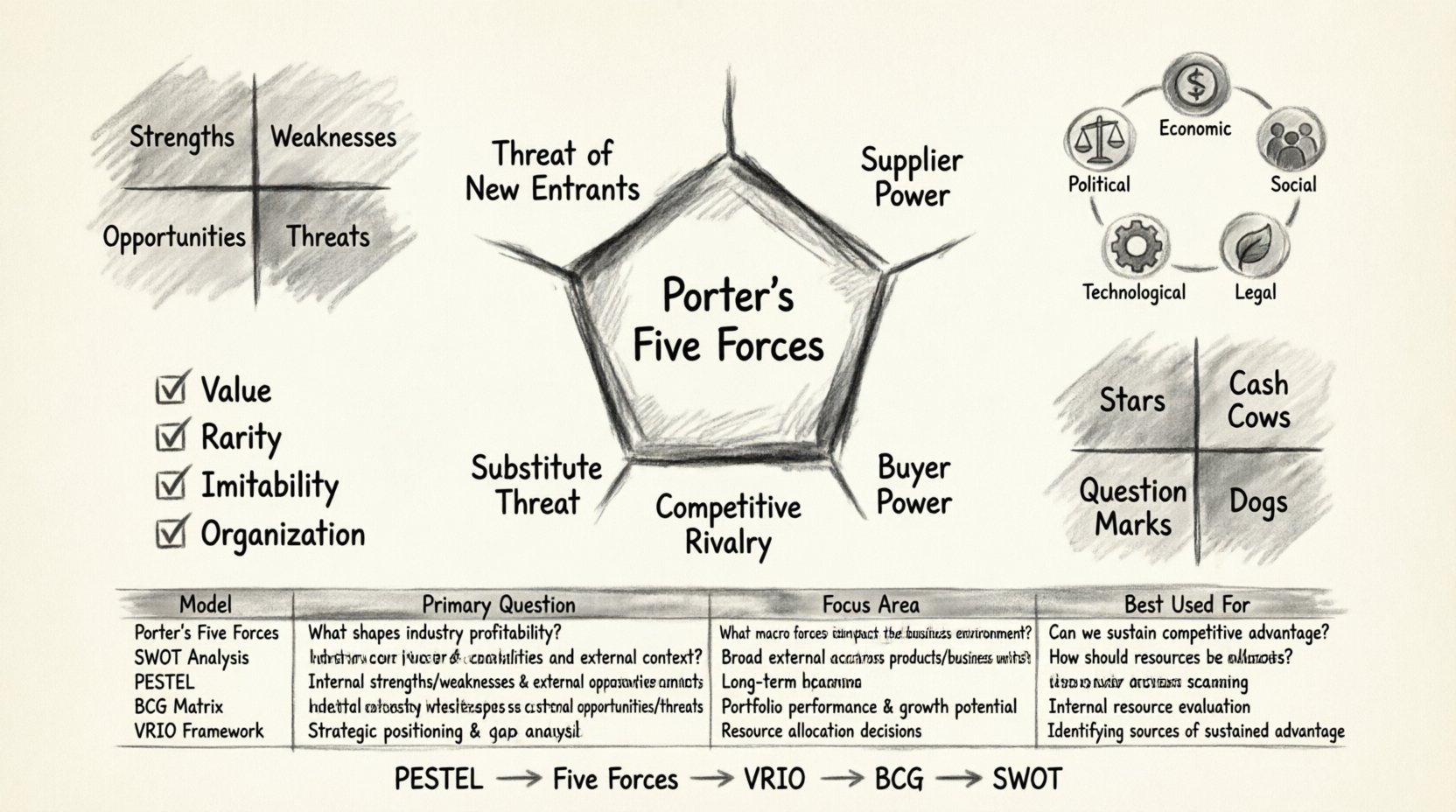
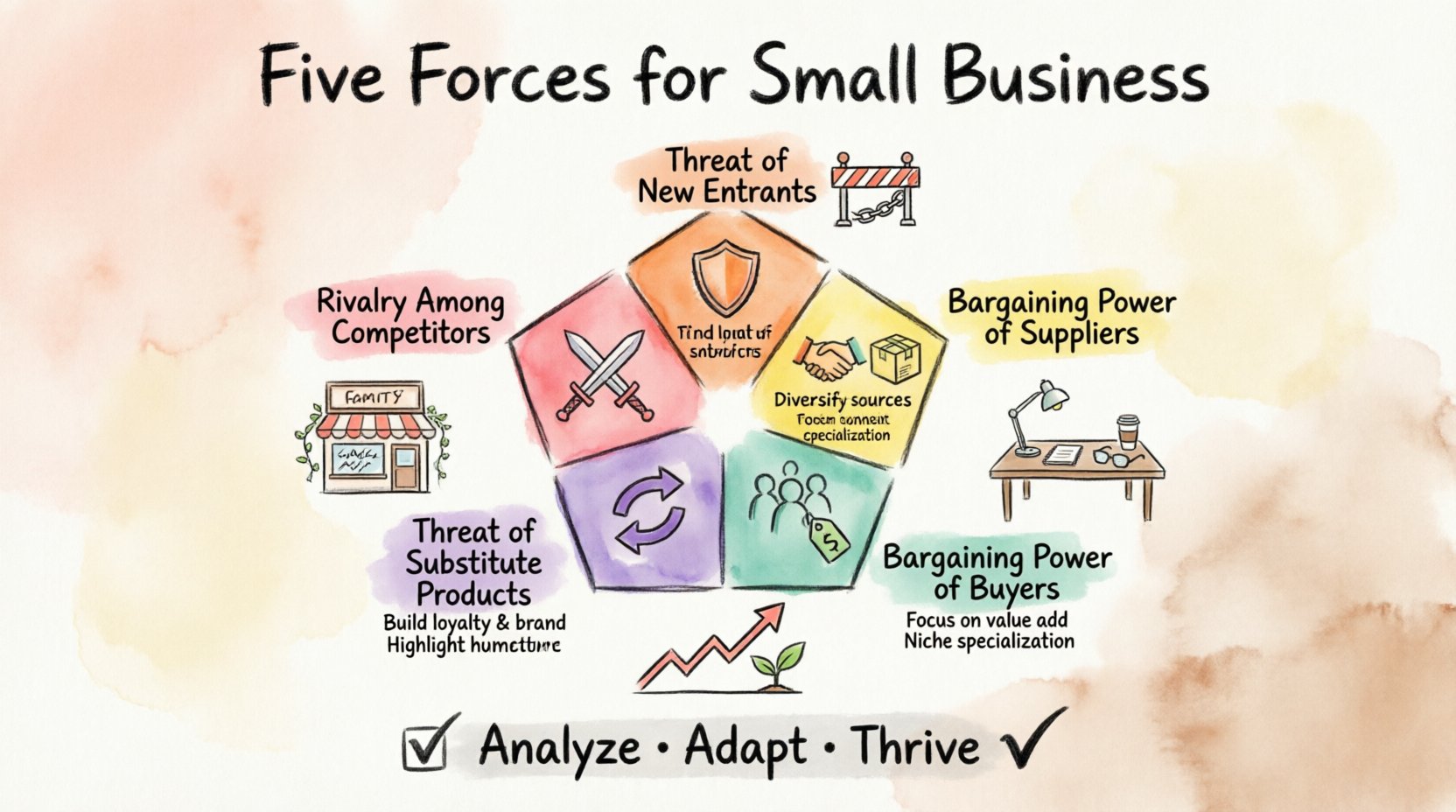
Before comparing, one must understand the baseline. Developed by Michael Porter in 1979, the Five Forces model assesses the competitive intensity and attractiveness of a market. It focuses on the external industry environment rather than internal company capabilities. The model identifies five specific forces that shape competition:
- Threat of New Entrants: How easy is it for competitors to enter the market? High barriers protect existing players. 🚧
- Bargaining Power of Suppliers: Can suppliers dictate terms or prices? Fewer suppliers often mean higher power. ⚖️
- Bargaining Power of Buyers: Can customers drive prices down? Many alternatives increase buyer power. 🛒
- Threat of Substitute Products: Are there alternative solutions that satisfy the same need? High substitution limits pricing power. 🔄
- Rivalry Among Existing Competitors: How intense is the current competition? Price wars and advertising battles indicate high rivalry. 🔥
This framework is primarily diagnostic. It answers the question: “Is this industry profitable?” It does not, however, dictate internal operational improvements or long-term macroeconomic shifts. 📉
SWOT Analysis: Internal vs. External 🏗️
SWOT (Strengths, Weaknesses, Opportunities, Threats) is perhaps the most common strategic tool found in corporate boardrooms. Unlike the Five Forces, which is purely industry-focused, SWOT integrates internal and external factors.
Key Distinctions
- Scope: Five Forces looks outward at the industry. SWOT looks both outward (Opportunities, Threats) and inward (Strengths, Weaknesses). 👀
- Granularity: Five Forces provides a specific structural analysis of industry profit potential. SWOT is often more qualitative and broad. 📝
- Usage: Five Forces helps decide whether to enter a market. SWOT helps decide how to position within that market. 🎯
When comparing Five Forces to SWOT, the distinction lies in causality. Five Forces explains why an industry behaves a certain way. SWOT explains what the organization is capable of doing about it. A robust strategy often begins with Five Forces to validate the market, followed by SWOT to assess readiness.
PESTEL Analysis: The Macro Lens 🌍
PESTEL stands for Political, Economic, Social, Technological, Environmental, and Legal factors. This framework operates at a higher level of abstraction than Five Forces. It analyzes the macro-environment that affects all industries within a region.
Comparative Analysis
| Dimension | Five Forces | PESTEL |
|---|---|---|
| Focus | Industry specific | Macro-environmental |
| Time Horizon | Medium-term | Long-term |
| Variables | Competitors, Suppliers, Buyers | GDP, Laws, Demographics |
| Primary Output | Profitability potential | Risk & Context |
PESTEL is essential for understanding the context in which the Five Forces operate. For instance, a new Environmental regulation (PESTEL) might increase the Threat of New Entrants (Five Forces) by raising compliance costs. Using them in tandem prevents blind spots regarding regulatory shifts or demographic trends.
BCG Matrix: Portfolio Strategy 📈
The Boston Consulting Group (BCG) Matrix focuses on business portfolio management rather than industry structure. It categorizes business units into four quadrants based on market growth and market share: Stars, Cash Cows, Question Marks, and Dogs.
Strategic Divergence
- Resource Allocation: BCG dictates where to invest cash flow. Five Forces dictates where the money can be made. 💰
- Unit Level vs. Industry Level: BCG analyzes specific product lines or divisions. Five Forces analyzes the entire sector. 🏢
- Growth Focus: BCG prioritizes growth rates. Five Forces prioritizes stability and barriers. 📊
If a company operates in multiple industries, Five Forces analyzes the attractiveness of each industry. BCG then determines which divisions within those industries generate cash and which require funding. The two models address different layers of corporate strategy.
VRIO Framework: Internal Capabilities 🧬
While Five Forces and PESTEL look outward, the VRIO framework looks inward at resources and capabilities. VRIO stands for Value, Rarity, Imitability, and Organization. It determines if a resource can provide a sustainable competitive advantage.
Integration with Five Forces
Five Forces identifies the battlefield. VRIO identifies the weapons. A company might enter a profitable industry (Five Forces) but fail if it lacks the specific capabilities to compete (VRIO).
- Value: Does the resource exploit an opportunity or neutralize a threat? 🛡️
- Rarity: Do few competitors possess this resource? 🤔
- Imitability: Is it costly for others to copy? 🚫
- Organization: Is the company structured to exploit the resource? 🏗️
Strategic planners often use Five Forces to validate the industry opportunity before applying VRIO to ensure the organization can capture that value. Relying solely on Five Forces without VRIO assessment leads to entering attractive markets where the company is outmatched.
Comparative Summary Table 📋
To visualize the differences clearly, consider this structured comparison of the primary strategic models.
| Model | Primary Question | Focus Area | Best Used For |
|---|---|---|---|
| Porter’s Five Forces | Is the industry attractive? | External Industry | Market Entry, M&A |
| SWOT Analysis | Where do we stand? | Internal & External | General Planning, Positioning |
| PESTEL | What external factors matter? | Macro Environment | Long-term Risk, Policy |
| BCG Matrix | How do we allocate capital? | Business Portfolio | Investment Decisions |
| VRIO | Why do we win? | Internal Resources | Competitive Advantage |
When to Use Which Model 🕰️
Selecting the right framework depends on the strategic question at hand. Using the wrong model can lead to misallocation of resources or missed opportunities.
Scenario 1: Entering a New Market 🌏
Start with Five Forces. Determine if the industry structure allows for profitability. If the answer is yes, apply PESTEL to understand regulatory and economic risks specific to that region. Finally, use SWOT to assess your specific readiness.
Scenario 2: Portfolio Optimization 🎨
If a corporation manages multiple business units, BCG Matrix is the primary tool. It identifies which units generate cash and which consume it. Five Forces should still be applied to the units classified as “Stars” or “Question Marks” to ensure the underlying industry remains viable.
Scenario 3: Crisis Management 🚨
During a crisis, SWOT provides a quick snapshot of immediate threats and internal weaknesses. PESTEL helps determine if the crisis is temporary or a structural shift. Five Forces helps predict if the competitive landscape will change permanently after the crisis.
Limitations of Relying on a Single Model ⚠️
Every framework has blind spots. Understanding these limitations is crucial for accurate strategic planning.
- Five Forces Limitations: It assumes a static industry structure. In rapidly evolving tech sectors, industry boundaries blur, making the model less predictive. It also ignores internal capabilities entirely. 🚫
- SWOT Limitations: It is often too generic. Listing “Weakness” is not an analysis until you understand the root cause. It lacks a prioritization mechanism. 📄
- PESTEL Limitations: It can become a laundry list of factors without connecting them to specific business impacts. It is broad rather than deep. 🌐
- BCG Limitations: It focuses on market share, not necessarily profitability or innovation. It can discourage investment in small but high-growth segments. 📉
- VRIO Limitations: It focuses heavily on internal resources, potentially missing external market shifts that render those resources obsolete. 🛑
Integrating Models for Holistic Strategy 🧩
The most effective strategists do not choose one model. They weave them together into a cohesive narrative. This integration creates a multi-layered view of the business environment.
The Integrated Workflow
- Macro Scan (PESTEL): Identify broad trends affecting the future. Are there regulatory changes or technological disruptions looming? 🌐
- Industry Check (Five Forces): Do these macro trends improve or worsen industry profitability? How do they affect supplier power or entry barriers? 🏭
- Internal Audit (VRIO): Do we have the resources to capitalize on these industry conditions? What capabilities do we lack? 🧬
- Portfolio Review (BCG): Which of our current units align with this analysis? Should we divest or invest? 💼
- Positioning (SWOT): Synthesize all data into a clear strategic statement regarding our strengths, weaknesses, opportunities, and threats. 🎯
This workflow ensures that no critical factor is overlooked. It moves the conversation from “Is the market good?” to “Are we ready to win in this market given the external context?”
Common Pitfalls in Strategic Analysis 🚧
Even with the right models, execution often falters. Here are common errors to avoid during the analysis phase.
- Data Overload: Collecting too much information without a clear hypothesis. Focus on data that changes the decision. 📊
- Static Analysis: Treating the analysis as a one-time event. Markets shift. Models must be revisited annually or during major disruptions. 🔄
- Ignoring Subjectivity: Quantitative data is important, but qualitative insights from frontline employees often reveal industry dynamics missing from reports. 🗣️
- Confusing Correlation with Causation: Just because a factor exists in PESTEL does not mean it drives Five Forces. Establish clear links between the models. 🔗
- One-Size-Fits-All: Applying a standard template to every business unit without considering unique industry nuances. 📝
Final Considerations for Strategic Planners 🏁
Selecting between strategic models is rarely an either/or decision. It is about layering insights to build a robust foundation for decision-making. Porter’s Five Forces provides the structural integrity of the industry landscape. SWOT connects that landscape to your internal reality. PESTEL adds the macroeconomic context. BCG manages the portfolio mix. VRIO secures the competitive moat.
When analyzing a business opportunity, start with the Five Forces to validate the potential. Then, layer the other models to assess feasibility and execution capability. This multi-dimensional approach reduces risk and increases the likelihood of sustainable success. Remember that strategy is not a static document but a dynamic process of adaptation. Continuously update your analysis as market conditions evolve. 🌱
By understanding the strengths and weaknesses of each framework, leaders can construct a comprehensive view of their strategic position. Avoid relying on a single metric or model. Embrace the complexity of the business environment. Use these tools to clarify choices, not to dictate them. The goal is informed judgment, not algorithmic certainty. 🧠
Ultimately, the value lies not in the model itself, but in the quality of the questions it prompts. Ask the right questions, and the analysis will provide the answers needed to navigate the competitive landscape effectively. 🛤️


Comments (0)