![Free eBooks of IT [BooksOfAll]](https://www.booksofall.com/wp-content/uploads/2022/06/booksofall-logo-2.png)
Tags:
Five Forces Model Q&A: Answers for Sole Proprietors and Family Businesses
Running a sole proprietorship or a family-owned enterprise involves unique challenges that differ significantly from large corporations. While big companies have dedicated strategy departments, you often wear multiple hats. Understanding your competitive landscape is critical, yet the tools available can feel overwhelming.
The Porter’s Five Forces framework provides a structured way to analyze industry attractiveness and competitive intensity. This guide breaks down the model specifically for smaller business owners. We will address common questions and provide actionable insights without jargon or unnecessary complexity.
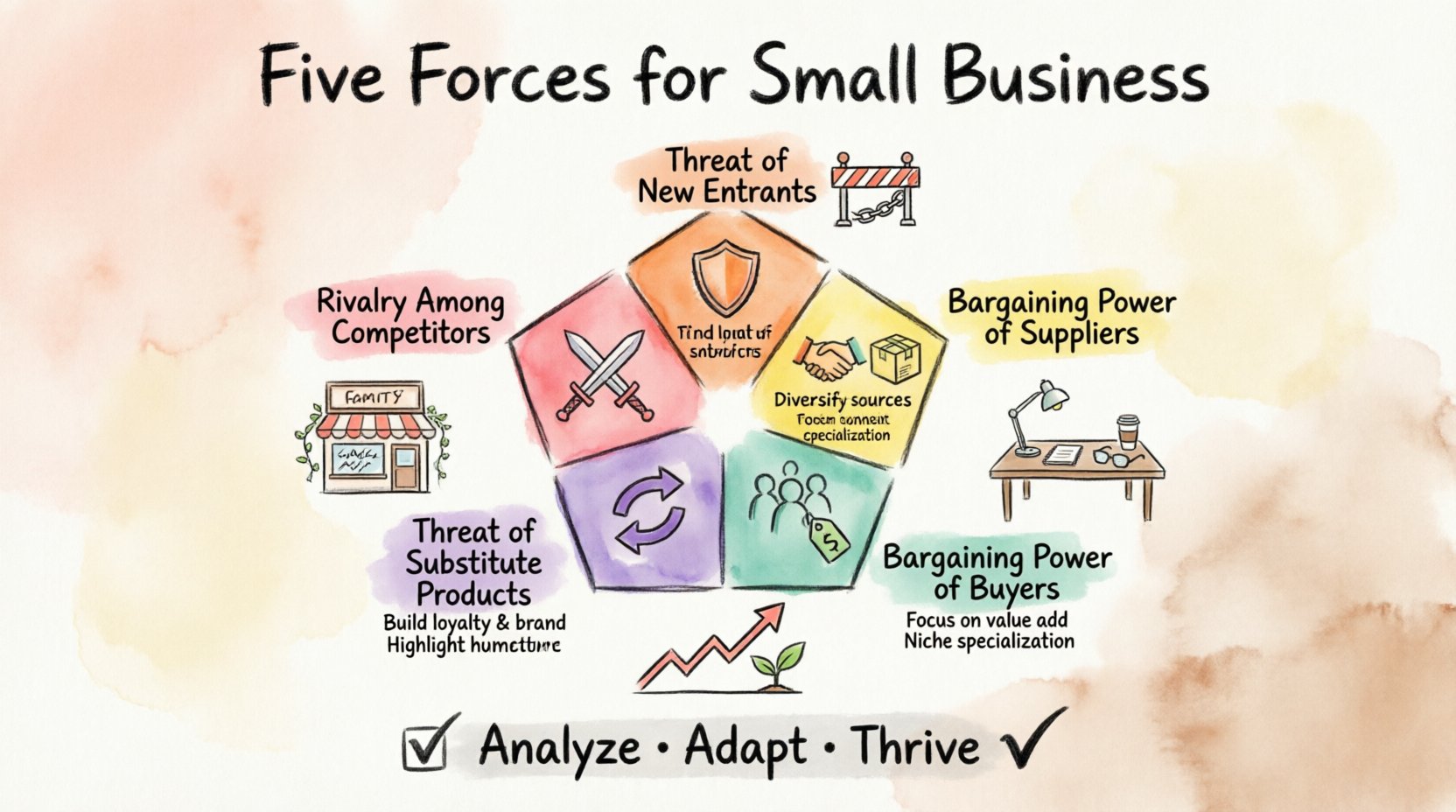
What Exactly is the Five Forces Model? 🤔
Developed by Michael Porter in 1979, this framework assesses the competitive environment of an industry. It looks at five specific forces that determine the profit potential and sustainability of a business.
- Threat of New Entrants: How easy is it for competitors to start up?
- Bargaining Power of Suppliers: How much control do your vendors have over prices?
- Bargaining Power of Buyers: How much influence do your customers have on pricing?
- Threat of Substitute Products: Are there alternative solutions customers might choose?
- Rivalry Among Existing Competitors: How intense is the competition currently?
For a family business, these forces interact with legacy relationships and long-term goals. A sole proprietor might focus more on immediate cash flow, but understanding these forces helps build a durable foundation.
Why This Analysis Matters for Small Businesses 💡
Many small business owners assume that strategy is only for large organizations. This is a misconception. Without a clear view of the forces at play, you risk reacting to market shifts rather than anticipating them.
Here is why this analysis is essential for your specific context:
- Risk Mitigation: Identifying threats early allows you to pivot before damage occurs.
- Resource Allocation: You can focus time and money on areas that provide the most leverage.
- Negotiation Leverage: Knowing the power dynamics helps when discussing terms with suppliers or clients.
- Succession Planning: For family businesses, understanding the industry’s health is vital for passing the torch to the next generation.
Q&A: Force 1 – Threat of New Entrants 🚧
This force measures how easy it is for new competitors to enter your market. High barriers to entry protect your market share.
Q: How do I assess barriers to entry for my specific business?
Look at the resources required to start. In some industries, the barrier is capital. In others, it is expertise or regulatory compliance.
- Capital Requirements: Do you need significant upfront investment? High costs deter entrants.
- Regulations: Are there licenses or permits required? Strict regulations create a filter.
- Brand Loyalty: If customers stick to your family name, new entrants face a steep climb.
- Access to Distribution: Can you easily reach your customers? If distribution channels are controlled, it limits new players.
Q: Does being a sole proprietor make me more vulnerable?
Yes and no. You are agile, which is an advantage. However, you may lack the economies of scale that protect larger firms. If a large chain enters your local area, they can undercut prices. To counter this, emphasize personal relationships and specialized service that big chains cannot replicate.
Q&A: Force 2 – Bargaining Power of Suppliers 📦
Suppliers can drive up prices or reduce quality, squeezing your margins. You need to know how much leverage they hold over you.
Q: How do I know if my suppliers have too much power?
Consider these indicators:
- Few Suppliers: If there is only one or two sources for your key materials, they hold the power.
- Switching Costs: Is it expensive or difficult to change vendors? High costs give suppliers leverage.
- Unique Products: If your supplier offers something unique, you cannot easily replace them.
- Threat of Integration: Can the supplier start making your product themselves? If so, they can compete with you.
Q: What can I do if my suppliers are demanding?
Focus on building relationships and diversifying your supply chain.
- Consolidate Orders: Combine purchases from multiple departments to increase volume.
- Develop Alternatives: Qualify backup suppliers even if you do not use them regularly.
- Long-term Contracts: Lock in prices and terms to reduce uncertainty.
- Vertical Integration: Consider bringing the production in-house if it is feasible.
Q&A: Force 3 – Bargaining Power of Buyers 👥
Customers can demand lower prices or higher quality. When buyers have power, they can reduce your profitability.
Q: How do I gauge buyer power in my niche?
Analyze the relationship between you and your customers.
- Concentration: Do you rely on a few large clients? If one client leaves, do you suffer? That indicates high power.
- Price Sensitivity: Are customers constantly looking for the cheapest option? High sensitivity increases buyer power.
- Product Differentiation: Is your product unique? If not, buyers can easily switch.
- Switching Costs: Does it cost your customer time or money to switch to a competitor? High costs reduce their power.
Q: Is buyer power higher for family businesses?
Often, yes. Local customers may expect personal discounts or flexible terms due to long-standing relationships. While this builds loyalty, it can erode margins. Be clear about your value proposition. If you offer convenience, quality, or speed, communicate that clearly so price is not the only factor.
Q&A: Force 4 – Threat of Substitute Products 🔄
Substitutes are different products that solve the same problem. They place a ceiling on your prices.
Q: How do I identify substitutes I might be missing?
Look at the problem your customer is trying to solve, not just your product.
- Functionality: Does a different method solve the same need? (e.g., video conferencing substitutes business travel).
- Price Performance: Is there a cheaper way to get the same result?
- Consumer Trends: Are habits shifting? (e.g., digital payments substituting cash).
Q: Can a family business survive the threat of substitutes?
Absolutely. The key is to focus on the human element. Substitutes often lack the personal touch of a family business. Emphasize trust, history, and community connection. These are intangible assets that digital or mass-produced substitutes cannot easily replicate.
Q&A: Force 5 – Rivalry Among Existing Competitors ⚔️
This force looks at how aggressively competitors fight for market share. High rivalry leads to price wars and increased marketing costs.
Q: How do I measure the level of rivalry in my area?
Review the market structure.
- Number of Competitors: More competitors often mean more rivalry.
- Industry Growth: In slow-growth markets, companies fight for existing customers more fiercely.
- Exit Barriers: Is it hard to leave the business? If companies are stuck, they keep fighting.
- Differentiation: If products are similar, price becomes the main battleground.
Q: Should I compete on price?
Generally, no. Competing on price is a race to the bottom. Instead, compete on value. For a sole proprietor, your agility allows you to adapt faster than larger rivals. Offer customization, faster turnaround, or superior customer service.
Comparing Force Levels in Small Business Context 📋
Use the table below to quickly assess the typical pressure points for small entities.
| Force | Typical Pressure for Small Biz | Strategic Focus |
|---|---|---|
| New Entrants | High (Low barriers) | Build loyalty and brand |
| Supplier Power | Moderate to High | Diversify sources |
| Buyer Power | High (Local expectations) | Focus on value add |
| Substitutes | Moderate | Highlight human connection |
| Competitor Rivalry | Variable | Niche specialization |
Implementing the Analysis Without Software 🛠️
You do not need expensive software to conduct this analysis. A structured approach using basic tools is often more effective for keeping the team aligned.
Step 1: Gather Data 📝
- Interview your top 10 customers.
- Review invoices from the last year.
- Monitor competitor pricing and offerings.
- Check industry reports and news.
Step 2: Brainstorm Session 🧠
- Set aside time with family members or key staff.
- Use a whiteboard to map out each of the five forces.
- Encourage honest feedback without judgment.
- Rate each force as Low, Medium, or High impact.
Step 3: Document Findings 📄
- Write a summary of the strongest threats.
- Identify the strongest opportunities.
- Assign owners to address specific risks.
- Review this document quarterly.
Step 4: Action Plan 🎯
- Convert insights into specific tasks.
- Set deadlines for implementation.
- Track progress manually or via simple tracking sheets.
Common Pitfalls to Avoid ⚠️
Even with a good framework, mistakes happen. Here are common errors made by small business owners during this process.
- Overlooking Local Nuance: National trends may not apply to your local market. Focus on your immediate environment.
- Ignoring Family Dynamics: In family businesses, emotions can cloud strategic judgment. Separate family roles from business analysis.
- Static Analysis: The market changes. Do not do this once and forget it. Update your findings annually.
- Analysis Paralysis: Do not spend months analyzing. Take action based on the 80% of data you have.
Integrating with Long-Term Planning 🗓️
The Five Forces model is not just a diagnostic tool; it is a planning tool. Use the results to shape your five-year vision.
Scenario Planning
Consider what happens if one force shifts dramatically.
- Scenario A: A major supplier raises prices by 20%. What is your contingency?
- Scenario B: A large competitor opens a store nearby. How do you differentiate?
- Scenario C: Customer demand drops. Which services do you cut?
Succession Considerations
For family businesses, this analysis informs succession.
- Knowledge Transfer: Ensure the next generation understands the competitive landscape.
- Adaptability: Teach them to reassess forces as they take over.
- Values: Ensure the strategic direction aligns with family values.
Final Thoughts on Strategic Clarity 🧭
Running a business is demanding. Adding a structured analysis might seem like extra work. However, clarity reduces uncertainty. By understanding the Five Forces, you move from reacting to events to preparing for them.
For sole proprietors, this means protecting your time and energy. For family businesses, it means securing the legacy for future generations. The goal is not to predict the future perfectly, but to be prepared for the possibilities.
Start today. Grab a notebook, gather your team, and map out the forces affecting your business. The insights you gain will guide your decisions for years to come.


Comments (0)