![Free eBooks of IT [BooksOfAll]](https://www.booksofall.com/wp-content/uploads/2022/06/booksofall-logo-2.png)
Tags:
Five Forces Model for Family Business Success Stories
Family businesses represent the backbone of many global economies. They carry a unique weight of legacy, governance, and long-term vision that distinguishes them from publicly traded corporations. However, maintaining continuity across generations requires more than just tradition. It demands rigorous strategic analysis. One of the most enduring frameworks for understanding market dynamics is Porter’s Five Forces. When applied specifically to the family business context, this model offers a clear lens through which to view competitive pressures and strategic opportunities.
This guide explores how family enterprises can leverage the Five Forces Model to navigate complex market landscapes. We will examine real-world applications, structural nuances, and actionable strategies without relying on software dependencies or fleeting trends. The goal is to provide a foundational understanding of how to sustain growth and resilience.
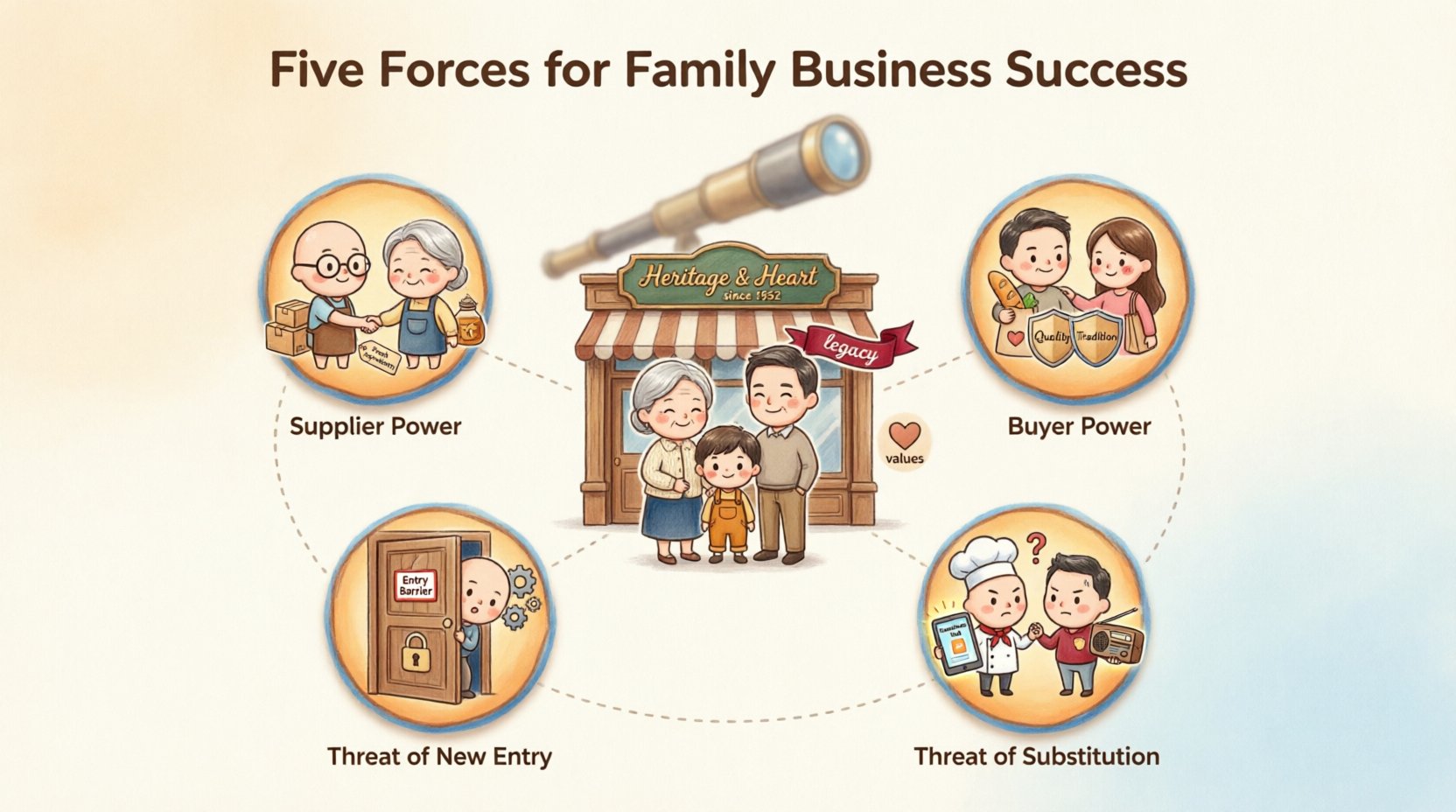
Understanding the Strategic Landscape 🌍
Family businesses often operate with a dual objective: financial profitability and the preservation of family values. This dual mandate can sometimes obscure market realities. The Five Forces Model provides a neutral ground to assess external threats and internal strengths. It moves the conversation from emotional decision-making to data-driven strategy.
For a family enterprise, the stakes are higher. A failed strategy does not just impact quarterly earnings; it impacts employment, family relationships, and reputation. Therefore, the analysis must be thorough and honest.
- Legacy vs. Innovation: Balancing what worked for the founder with what works today.
- Control vs. Autonomy: Managing decision-making hierarchies that differ from standard corporate structures.
- Long-term vs. Short-term: Prioritizing multi-generational survival over immediate market gains.
Breaking Down the Five Forces 🔍
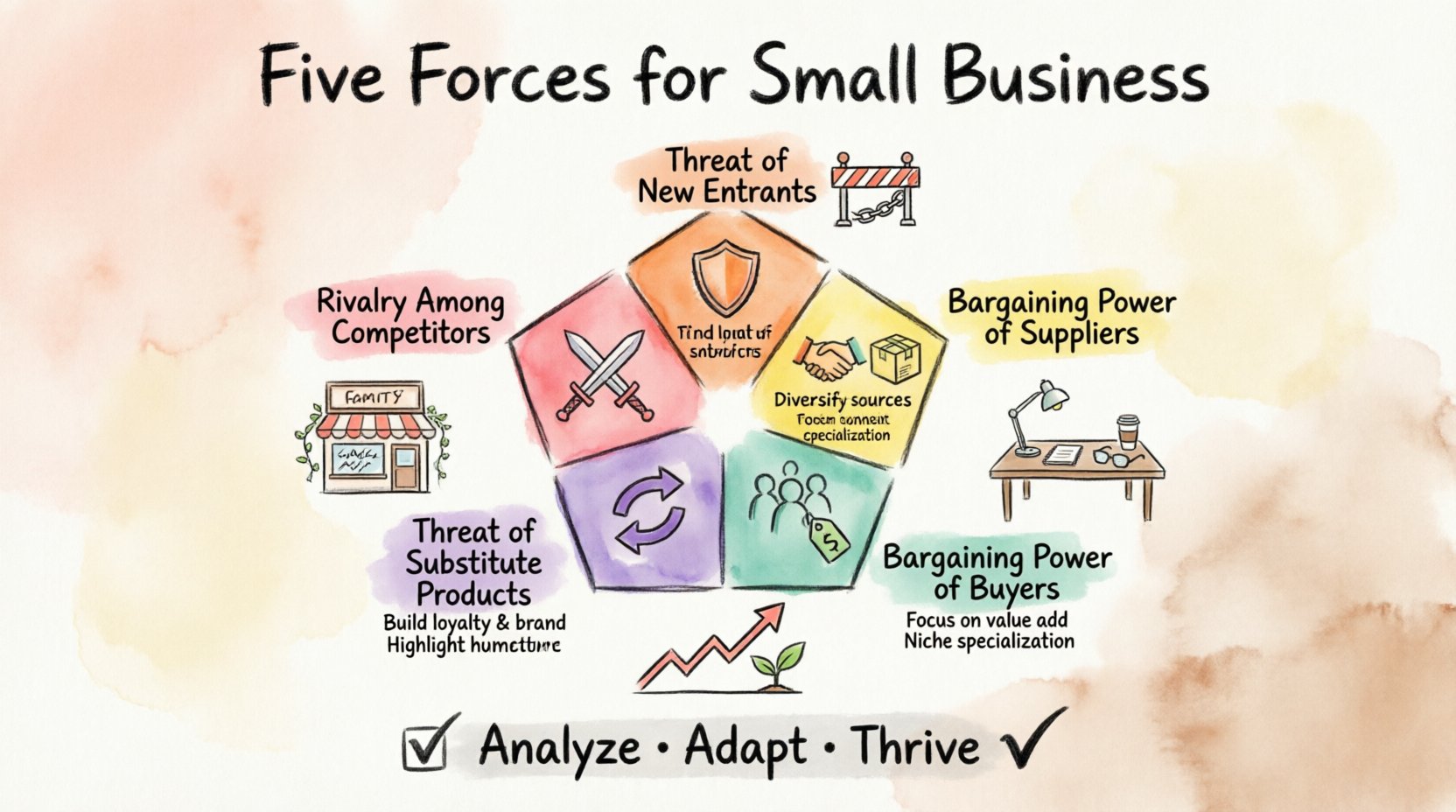
To utilize this framework effectively, one must understand the specific mechanics of each force. In a family business setting, these forces interact differently than in a typical corporation.
1. Supplier Power 👥
This force measures the ability of suppliers to drive up prices of inputs. For family businesses, supplier relationships are often deeply personal and long-standing.
- Dependency: Many family firms rely on a single supplier for key materials due to historical trust. This creates vulnerability.
- Negotiation Leverage: Family networks can sometimes provide better terms than corporate contracts, but reliance on these networks can limit market agility.
- Integration: Successful family businesses often move backward into the supply chain to control costs and ensure quality.
2. Buyer Power 💰
This force assesses the pressure customers can place on a business to lower prices or improve quality. Family businesses often have loyal customer bases, which can mitigate this power.
- Loyalty: Customers often buy from family businesses due to trust in the brand name.
- Price Sensitivity: If the family brand is premium, buyer power is lower. If the market is commoditized, buyer power increases.
- Direct Relationships: Family businesses frequently maintain direct contact with buyers, allowing for quicker adaptation to feedback.
3. Competitive Rivalry ⚔️
This is the intensity of competition among existing players. In the family sector, rivalry is often intense because competitors are also family-owned, leading to similar strategies.
- Market Saturation: Family businesses often dominate specific niches, leading to crowded markets.
- Non-Price Competition: Differentiation often comes from service quality or brand heritage rather than price wars.
- Succession Planning: Rivalry can increase during succession periods if competitors perceive instability.
4. Threat of Substitution 🔄
This force looks at the likelihood of customers finding a different product or service to solve the same need. Technology often drives this force.
- Tradition vs. Modernity: Family businesses may resist new technologies that substitute their core offerings.
- Innovation Cycles: The speed of substitution is faster in tech-driven industries, requiring family firms to pivot quickly.
- Value Proposition: If the family business offers an emotional connection, substitution becomes harder.
5. Threat of New Entry 🚪
This force analyzes how easy it is for new competitors to enter the market. Barriers to entry are crucial for protecting market share.
- Capital Requirements: Family businesses often have access to retained earnings, lowering capital barriers compared to startups.
- Brand Reputation: A long history acts as a barrier against new entrants who lack trust.
- Regulatory Hurdles: Existing licenses or industry certifications can protect incumbents.
Family Dynamics in Competitive Analysis 🤝
The application of the Five Forces Model in a family business requires an understanding of internal governance. Family dynamics can either amplify or dampen the impact of these external forces.
| Force | Corporate Approach | Family Business Approach |
|---|---|---|
| Supplier Power | Contractual negotiation | Relationship-based negotiation |
| Buyer Power | Data-driven segmentation | Personalized service focus |
| Rivalry | Market share growth | Legacy preservation |
| Substitution | R&D investment | Brand heritage reinforcement |
| New Entry | Scale and efficiency | Trust and community ties |
Success Stories and Strategic Application 🏆
Reading about theory is one thing; seeing it applied is another. The following scenarios illustrate how family businesses have utilized this model to secure their future. These examples focus on the strategic decisions made rather than the specific tools used.
Case A: Manufacturing Legacy
A family-owned manufacturing firm faced rising supplier costs. They utilized the Five Forces analysis to realize their dependency on a single raw material provider was a critical risk. Instead of negotiating lower prices, they vertically integrated. They acquired a smaller supplier upstream. This decision reduced supplier power significantly and stabilized margins for the next decade.
- Action: Vertical integration.
- Result: Reduced vulnerability to price hikes.
- Lesson: Control the supply chain to control the cost.
Case B: Retail Heritage
A multi-generational retail chain saw a surge in buyer power as online competitors emerged. They analyzed the threat of substitution and realized that physical presence was their unique advantage. They did not try to compete on price. Instead, they enhanced the in-store experience, offering services that online retailers could not match.
- Action: Enhanced experiential retail.
- Result: Increased foot traffic and customer loyalty.
- Lesson: Leverage physical assets when digital substitution threatens.
Case C: Agricultural Enterprise
A farming family business faced the threat of new entrants from large agribusiness corporations. They analyzed the barriers to entry and found that their local community trust was a significant asset. They pivoted to a direct-to-consumer model, selling directly to local families.
- Action: Shortened the distribution channel.
- Result: Higher margins and stronger community ties.
- Lesson: Build barriers based on relationships.
Implementation Steps Without Software 📝
Conducting a Five Forces analysis does not require expensive management consulting software. It requires structured thinking and collaboration. Here is a step-by-step process to execute this analysis within a family business.
Step 1: Assemble the Team 👥
Gather key stakeholders. This should include family members involved in the business, non-family executives, and potentially an external advisor to ensure objectivity.
- Ensure a mix of generations (Founder, Successor, Next Gen).
- Include department heads who understand operational realities.
Step 2: Define the Industry Boundaries 🗺️
Clearly define what constitutes your market. This prevents scope creep during the analysis.
- Identify direct competitors.
- Identify substitute products.
- Identify potential suppliers and buyers.
Step 3: Gather Qualitative Data 📊
Collect information through interviews, market research, and internal records. You do not need automated dashboards for this.
- Interview long-term suppliers.
- Survey customer satisfaction.
- Review competitor financial reports if public.
Step 4: Rate the Forces ⚖️
Assign a rating to each force: Low, Medium, or High. Be honest about the risks.
- Low: Minimal threat or pressure.
- Medium: Manageable but requires attention.
- High: Critical threat requiring immediate strategy adjustment.
Step 5: Develop Strategic Responses 🛡️
For every high-rated force, create a mitigation plan.
- If Supplier Power is High: Diversify sources or integrate.
- If Buyer Power is High: Differentiate the product.
- If Rivalry is High: Find a niche or consolidate.
- If Substitution is High: Innovate or pivot.
- If New Entry is High: Raise barriers or acquire entrants.
Common Pitfalls to Avoid ⚠️
Even with a solid framework, errors can occur during the execution of a Five Forces analysis. Family businesses are particularly susceptible to specific biases.
Pitfall 1: Emotional Blind Spots
Family members may overlook threats to protect the family name. They might downplay the threat of new entrants because they believe their brand is untouchable.
- Solution: Bring in an objective third party to challenge assumptions.
Pitfall 2: Static Analysis
Market conditions change. A once-low threat can become high quickly.
- Solution: Schedule annual reviews of the analysis.
Pitfall 3: Ignoring Internal Weaknesses
External forces are only dangerous if internal weaknesses exist. A strong supply chain can withstand high supplier power, but a weak one cannot.
- Solution: Pair external analysis with an internal audit of capabilities.
Pitfall 4: Over-Reliance on History
Just because a strategy worked for the grandfather does not mean it works for the grandson.
- Solution: Validate historical successes against current market data.
Integrating Family Governance with Strategy 🏛️
Success in a family business requires alignment between the family council and the business strategy. The Five Forces Model provides the common language needed for this alignment.
- Communication: Use the model to explain market pressures to family members who are not in the business.
- Succession: Ensure the next generation understands the competitive landscape they will inherit.
- Values: Align strategic choices with the family’s core values. For example, if sustainability is a value, supplier power analysis should prioritize ethical sourcing.
The Role of Innovation in the Model 💡
Innovation is the primary counter to substitution and new entry. However, family businesses must balance innovation with preservation.
- Incremental Innovation: Improving existing products without changing the brand identity.
- Disruptive Innovation: Creating new markets. This requires higher risk tolerance.
- Process Innovation: Improving efficiency to combat cost pressures from suppliers and buyers.
When analyzing the threat of substitution, family leaders must ask: “Are we selling a product or a solution?” If the market shifts away from the product, the solution must remain relevant.
Conclusion on Strategic Resilience 🛡️
The Five Forces Model is not a crystal ball. It is a tool for clarity. For family businesses, it offers a structured way to navigate the complex intersection of market forces and family dynamics. By understanding supplier power, buyer power, rivalry, substitution, and new entry, family enterprises can build defenses that last across generations.
Success in this arena requires discipline. It requires looking at the business objectively, even when emotions run high. It requires planning for the future while honoring the past. When executed correctly, this analysis transforms from a theoretical exercise into a roadmap for longevity.
The businesses that endure are those that adapt to the forces around them without losing their core identity. By applying this framework consistently, family leaders can secure their legacy and ensure the business remains a vital part of the economy.
Final Checklist for Leaders ✅
- Review: Have we updated our analysis in the last 12 months?
- Engage: Are non-family managers involved in the assessment?
- Document: Is the strategy documented and accessible to the leadership team?
- Align: Does the strategy match the family constitution or governance documents?
- Act: Are there specific action items assigned to each force identified?
Adopting this mindset ensures that the family business remains competitive, relevant, and resilient in an ever-changing world.


Comments (0)